
Views: 0 Author: Site Editor Publish Time: 2026-07-26 Origin: Site


Compressed air acts as the utility backbone of any successful dental practice. It drives everything from your high-speed handpieces to essential 3-in-1 syringes. Without reliable air, your daily clinical operations immediately grind to a halt. However, air quality matters just as much as air availability. Even trace amounts of aerosolized oil or moisture severely compromise restorative procedures. Contaminated air violates strict infection control protocols and accelerates the degradation of expensive operatory equipment. Transitioning to an Oil-Free Compressor Pump is no longer just an optional clinic upgrade. It serves as a baseline compliance and risk-mitigation requirement for modern dental facilities. You need absolutely clean, dry air to protect your patients and your intricate tools. In this article, you will learn exactly how oil-lubricated air threatens clinical outcomes. We will explore key evaluation metrics and ISO benchmarks to guide your next equipment upgrade. Ultimately, you will discover how to select the perfect air system for your specific clinical needs.
Clinical Integrity: Oil-free systems prevent hydrocarbon contamination, directly reducing the risk of composite bonding failures and cross-contamination.
Regulatory Compliance: Meeting ISO 8573-1 Class 0 standards for medical air requires oil-free compression architecture.
Sizing Matters: Correctly evaluating CFM (Cubic Feet per Minute), PSI, and integrated drying technology is critical for supporting concurrent operatory use without pressure drops.
Microscopic oil vapor easily bypasses standard filtration systems used in older setups. It travels through the pneumatic lines and coats tooth surfaces during critical dental procedures. This invisible hydrocarbon layer disrupts the chemical adhesion required for modern composites. You end up facing frustrating composite and cementation failures. Redoing these procedures wastes valuable chair time and damages patient trust. Even a microscopic barrier prevents the bonding agent from penetrating the dentinal tubules. When restorations fail prematurely, your clinical reputation suffers unnecessarily. Clean air eliminates this hidden variable from your restorative workflow entirely.
Oil and moisture often combine inside warm pneumatic air lines. They create highly favorable breeding grounds for dangerous bacterial growth and biofilm formation. When you spray air into a patient's mouth, you risk introducing these dangerous pathogens directly. This biological risk compromises your entire facility infection control protocol. It puts vulnerable and immunocompromised patients at significant risk of postoperative complications. Dental units must deliver hygienic air to maintain a sterile operating field. You cannot achieve true sterility if your compressor continually injects warm oil vapor into the internal plumbing.
Oil buildup directly impacts the delicate turbines inside modern dental handpieces. Residue bakes onto precision bearings during the high-heat autoclave sterilization process. You will soon notice sluggish tool performance and highly irregular turbine speeds. These expensive handpieces then require more frequent and complicated repairs. Your overall clinical efficiency drops when essential tools malfunction unexpectedly mid-procedure. Furthermore, removing baked-on oil sludge from internal channels proves nearly impossible for standard sterilization cycles. Switching to clean air protects your heavy investments in advanced operatory instrumentation.
The ISO 8573-1 Class 0 standard defines the highest possible level of commercial air purity. It mandates mathematically zero added oil in the main compression chamber. Medical and dental applications demand strict adherence to this rigorous standard. You cannot risk any oil vapor entering the patient's respiratory tract or open surgical wounds. Class 0 certification guarantees absolute clinical safety across all operatory endpoints. Regulatory bodies increasingly look for this certification during facility compliance audits. It serves as the ultimate proof of your commitment to superior patient safety.
Many clinics try to rely on coalescing filters attached to an older oiled compressor. This approach introduces a dangerously high margin of operational error. Filters eventually reach saturation points without triggering any warning alarms. Maintenance lapses occur frequently in busy, high-volume dental practices. Vapor easily passes through saturated filters when ambient temperatures fluctuate during the day. Filtering simply tries to clean dirty air instead of preventing contamination at the source. It leaves you constantly vulnerable to downstream contamination events.
Modern clean-air systems utilize advanced internal engineering to solve this problem natively. Teflon-coated cylinders and specialized piston rings generate clean air automatically. They never require liquid lubrication inside the sealed compression chamber. This inherent design produces high-quality medical air without relying on downstream trapping mechanisms. It entirely removes the guesswork from your utility air supply. You no longer have to wonder if your filter media has quietly failed. The mechanical architecture guarantees the air remains pristine from intake to delivery.
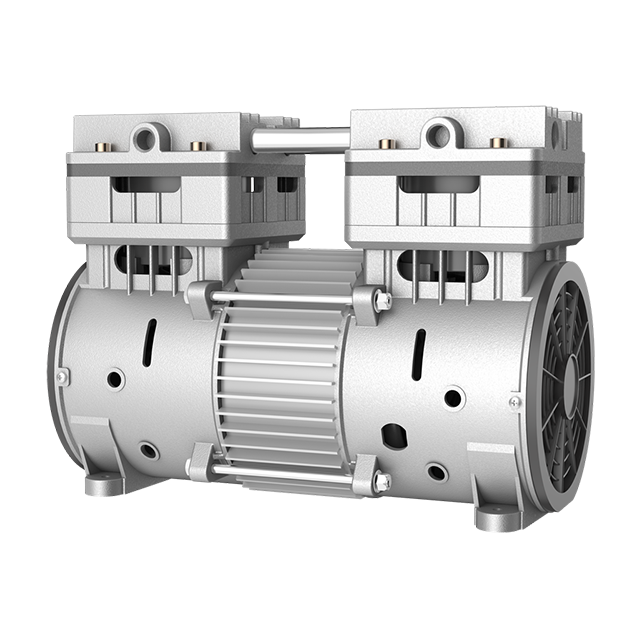
You must calculate your facility air needs accurately before purchasing any equipment. Map concurrent user demand directly against the total pump capacity. A standard high-speed handpiece requires about 1.5 to 2.0 CFM to operate smoothly. Suction valves, lab equipment, and cleaning syringes add further volumetric demand. Never undersize your utility equipment. Undersizing causes continuous motor cycling, severe system overheating, and dangerous pressure loss mid-procedure. Use a reliable calculation framework to protect your daily clinical workflow. You should always factor in a 20% expansion buffer for future clinic growth.
| Operatory Size | Simultaneous Users | Recommended Minimum CFM | Suggested Tank Size (Gallons) |
|---|---|---|---|
| Small Clinic (1-2 Chairs) | 1-2 | 4.0 - 5.0 CFM | 10 - 15 |
| Medium Clinic (3-5 Chairs) | 3-4 | 8.0 - 10.0 CFM | 20 - 30 |
| Large Clinic (6+ Chairs) | 5+ | 12.0+ CFM | 30 - 40+ |
Oil removal only solves half of your compressed air problem. You must pair the pump with an integrated desiccant dryer. This combination achieves a strictly hygienic dew point. It actively prevents internal tank rust and dangerous air-line condensation. Dry air stops bacteria from colonizing your intricate plumbing network. High-quality systems use twin-tower desiccant dryers for continuous moisture removal. As one tower dries the incoming air, the system automatically purges the other. This ensures your handpieces receive perfectly dry air all day long.
Historically, clean-air systems generated substantial noise in the utility room. Modern engineering has largely solved this major facility drawback. You should evaluate specific soundproofing criteria before selecting a unit. Look for dense acoustic cabinets and heavy-duty vibration-isolation mounts. Determine the acceptable decibel threshold for your specific clinical environment. Most modern units run comfortably below 65 dBA, ensuring a peaceful patient experience. If your utility closet sits directly adjacent to an operatory, prioritizing acoustic management becomes absolutely critical for patient comfort.
Vendors often market these clean-air systems as entirely maintenance-free machines. We must clarify this expectation immediately for practice owners. You eliminate messy fluid changes completely from your facility schedule. However, the advanced pumps still require strict attention to preventative care. You must adhere tightly to intake filter replacement schedules. Desiccant media inspections remain critical for generating continuous dry air. Proper routine care prevents catastrophic mid-day mechanical failures. Ignoring these simple checks will eventually compromise the integrity of the specialized Teflon components.
Set realistic hardware lifecycle projections before installation begins. A high-quality unit typically delivers 10,000 to 15,000 hours of operation. After this operational period, you will likely need a comprehensive pump rebuild. Regular ambient air filter changes help you reach the upper end of this lifespan. Treat the system as a critical, long-term clinical partner. High ambient temperatures or heavy dust loads will shorten this timeframe considerably. Monitoring your total run hours allows you to schedule rebuilds proactively rather than reactively.
Proper physical installation dictates ongoing daily performance. You must install dedicated, correctly rated electrical circuits. Standard wall outlets cannot handle the necessary startup amperage surge. Environmental needs also demand your immediate attention. Ensure proper room ventilation for adequate compressor heat dissipation. A cool, well-ventilated utility room ensures peak pump longevity.
Verify your facility electrical panel capacity with a licensed electrician.
Measure utility room dimensions to ensure adequate clearance around the equipment.
Install dedicated exhaust ventilation fans to remove excess heat.
Mount the unit on a level, vibration-dampening floor mat.
Connect the system using flexible, medical-grade pneumatic hosing.
Space limitations often dictate your primary choices here. Focus heavily on a compact overall equipment footprint. Ultra-quiet operation remains vital if the utility room sits near active patient areas. Ensure 115V or 230V standard electrical compatibility based on your existing clinic wiring. Single-head units usually handle this specific volumetric capacity perfectly. These smaller units offer exceptional reliability without requiring massive infrastructure upgrades. They provide a seamless plug-and-play experience for boutique dental operations.
Future scalability becomes your primary operational concern. Focus on acquiring dual-head or multi-motor hardware redundancy. If one motor requires service, the other immediately keeps your clinic running smoothly. Demand high-capacity reserve tanks to handle sudden demand spikes. Prioritize networked duty-cycling capabilities to balance the mechanical wear across multiple compressor heads. Large surgical centers cannot afford even a minute of pneumatic downtime. Redundant systems provide the ultimate insurance policy for your busy daily schedule.
Never purchase critical clinical infrastructure strictly on initial price alone. Evaluate equipment manufacturer credibility rigorously before signing purchase orders. Examine the warranty terms specifically covering the internal pump block. Ensure the fast availability of certified local technicians in your immediate geographical area. Always request verified compliance documentation for ISO standards before finalizing any purchase.
Verify the manufacturer holds official ISO 8573-1 Class 0 testing documentation.
Check local technician dispatch times and emergency weekend availability.
Review warranty inclusions for the specialized Teflon cylinders and piston rings.
Ask for references from similarly sized dental practices in your region.
Procuring a specialized, clean-air system represents a major strategic shift for your dental practice. It stands as a vital, non-negotiable investment in clinical reliability. You directly enhance patient safety while gaining complete operational peace of mind. Remember, proper volumetric sizing matters immensely for daily performance. Integrated desiccant moisture control remains just as critical as the core compression mechanism itself. You cannot compromise on moisture elimination technology without risking equipment damage. Procurement managers and practice owners should act proactively today. Schedule a comprehensive facility air-demand audit immediately. Request a customized equipment sizing quote from a certified vendor to secure your clinical workflow permanently.
A: Historically, they were louder due to higher internal friction levels. However, modern engineering has effectively eliminated this issue. Leading manufacturers now utilize heavy-duty sound-dampening enclosures. They also incorporate advanced vibration-isolation mounts. These distinct advancements keep operational noise below 65 dBA. Your patients will not hear the equipment running from the operatory.
A: Service intervals depend heavily on your specific operating hours. A general baseline requires desiccant cartridge replacement every two to three years. In highly humid environments or busy multi-chair clinics, you might need annual service. Always monitor the humidity indicator on your system to prevent unexpected moisture bypass.
A: Retrofitting introduces massive compliance and failure-rate risks. Filters eventually saturate, allowing microscopic hydrocarbon vapors to pass into your air lines. It is nearly impossible to achieve ISO 8573-1 Class 0 medical air through retrofitting alone. Replacing the entire unit ensures mathematical zero oil addition, keeping your patients safe.
A: Undersizing forces the electric motor into rapid, continuous cycling. This constant running generates excessive heat. The built-in dryer cannot keep up, causing severe moisture bypass. You will experience dangerous pressure drops mid-procedure. Ultimately, this strain drastically shortens the overall lifespan of your expensive pump block.


