
Views: 0 Author: Site Editor Publish Time: 2026-08-20 Origin: Site


Selecting a medical Vacuum Pump is never a simple component purchase. It remains a critical risk-management decision for your entire project. This choice directly dictates device reliability, patient safety, and regulatory compliance. The medical device sector rapidly shifts toward extreme miniaturization. Designers now demand quieter operation and strictly oil-free technologies. Older, bulky pneumatic systems no longer meet modern clinical needs. They consume too much power and generate excessive heat.
This guide provides an objective framework for your development team. Clinical engineers, OEM designers, and procurement teams will learn how to evaluate various mechanisms. We will help you shortlist and integrate the exact technology your application demands. You will discover how to match pneumatic performance to your physical constraints. Integrating the right pump requires balancing size, power limits, and strict regulatory standards. Read on to master these complex integration realities and prevent costly redesigns.
Technology matching is critical: No single pump technology universally applies; selection must balance flow rate, maximum vacuum level, and form factor.
Oil-free is the standard: Dry/oil-free vacuum pumps (diaphragm, dry rotary vane, piston) dominate medical applications due to contamination risks and maintenance overhead.
Compliance dictates design: Integration must account for strict regulatory standards (e.g., ISO 10079 for suction, NFPA 99 for facility systems) from the earliest prototyping stages.
Total Cost of Ownership (TCO) extends beyond unit price: Evaluation must factor in component lifespan, preventative maintenance cycles, and the hidden costs of thermal management and acoustic dampening.
OEM integration demands a strict operational balance. You must weigh SWaP (Size, Weight, and Power) constraints against reliable pneumatic performance. Medical devices shrink in physical volume every single year. However, they still require continuous, highly stable vacuum pressure. Portable emergency equipment relies entirely on lightweight components to remain viable in the field. A successful design perfectly aligns your physical footprint limits with clinical suction demands.
Specifying the wrong pump triggers severe cascading effects across your entire system. An underpowered unit inherently suffers from severe thermal throttling. This excess heat leads to premature component wear and sudden system shutdowns. Furthermore, excessive pump vibration easily disrupts sensitive diagnostic sensors mounted nearby. These technical failures risk patient safety immediately. Failing to meet specific pneumatic standards also delays your FDA or MDR clearance significantly. Such delays derail product launch timelines and damage brand reputation.
Operating environments dictate a rigid regulatory baseline for your components. You must specify biocompatible materials to prevent any patient contamination. Cleanroom manufacturability is often a non-negotiable baseline requirement for sensitive devices. Your chosen pump manufacturer must adhere strictly to ISO 13485 quality systems. This certification ensures every shipped unit performs identically to your original validated prototype. Predictability in manufacturing guarantees safety in the clinical setting.
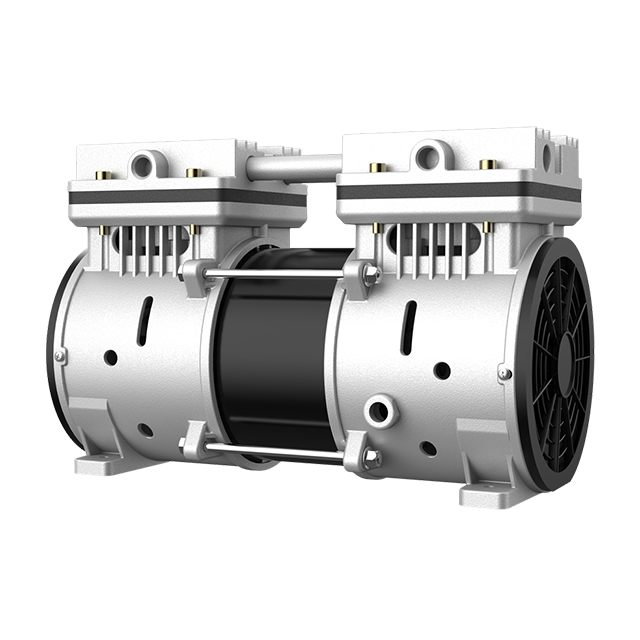
Engineers choose from several distinct pneumatic technologies. Each mechanical design offers unique advantages and specific physical limitations. You must match the mechanism exactly to your application.
This design relies on the continuous oscillation of a flexible membrane. The membrane flexes rapidly up and down to displace ambient air. These units are strictly 100% oil-free and highly leak-tight. They excel in continuous operation environments where contamination is unacceptable. Manufacturers can scale these pumps down to incredibly small micro-sizes easily.
However, diaphragm models are physically limited to rough or medium vacuum levels. They also deliver noticeably lower volumetric flow rates compared to rotary models. They work best in closed-loop systems requiring precise control.
A rocking piston mechanism features a piston rigidly attached to a connecting rod. The piston rocks slightly as it moves up and down within the cylinder. They offer exceptional pressure and vacuum capabilities within a very compact footprint. They operate completely oil-free and remain highly cost-effective for large production runs.
Conversely, they generate higher vibration levels compared to diaphragm pumps. They also produce a louder operating noise. You will need specific acoustic mitigation strategies, such as internal mufflers, to silence them effectively.
These models use specialized sliding vanes mounted inside a cylindrical rotor. The rotor spins eccentrically inside the main cavity to trap and move air. They provide exceptionally high volumetric flow rates. You get smooth, continuous air delivery experiencing very low pulsation.
The main drawback involves inevitable vane wear. Physical friction produces fine carbon dust over time. This dust absolutely requires stringent exhaust filtration in medical settings. They also demand shorter, more rigid maintenance intervals to prevent failure.
Scroll mechanisms utilize two interleaving spiral metal scrolls. One scroll remains perfectly stationary while the other orbits around it. They are extremely quiet and completely dry. They generate much deeper vacuum levels smoothly and consistently.
Their primary disadvantages are a much larger physical footprint and substantial weight. They also carry a significantly higher initial acquisition cost. They typically serve stationary laboratory equipment rather than portable devices.
| Technology Type | Primary Advantage | Ideal Medical Application | Main Limitation |
|---|---|---|---|
| Diaphragm Pump | 100% Oil-free, highly leak-tight | Portable NPWT, IVD Systems | Lower maximum flow rates |
| Rocking Piston | High vacuum in compact size | Portable Ventilators, Aspirators | Requires vibration mitigation |
| Dry Rotary Vane | Smooth, very high air flow | Central facility suction | Generates carbon dust exhaust |
| Scroll Pump | Deep vacuum, ultra-quiet | Lab automation, degassing | Larger physical footprint |
Different clinical scenarios demand highly specific pneumatic performance profiles. A surgical room requires vastly different equipment than a diagnostic laboratory.
Surgical and airway suction aspirators require immediate, rapid response times. They need incredibly high flow capacity to clear bodily fluids quickly during emergencies. Designers must ensure strict adherence to ISO 10079-1 standards for these critical devices. The pump must handle sudden surges in fluid volume without stalling.
Negative Pressure Wound Therapy (NPWT) systems demand ultra-compact components. These battery-operated micro-pumps must deliver exceptional energy efficiency to prolong battery life. Silent operation is absolutely critical to ensure long-term patient comfort during sleep. The pump maintains a gentle, continuous vacuum to promote tissue granulation.
Respiratory care equipment and ventilators focus heavily on precise pressure control. They require absolute zero-contamination, oil-free operation to protect patient airways. Long-term mechanical reliability is paramount. The internal system must run continuously without any noticeable degradation in flow stability.
In-Vitro Diagnostics (IVD) and automated lab systems handle precise liquid transfers daily. They execute complex chemical degassing and rapid sample preparation tasks. These applications heavily favor pulsation-free diaphragm or scroll pumps. Smooth operation protects fragile biological samples from shearing forces.
Autoclaves and sterilization units operate in extremely harsh environments. They demand highly robust components. The chosen Vacuum Pump must handle high moisture content safely. It must quickly evacuate high-temperature steam without corroding internal compression chambers.
Evaluating a pump goes far beyond reading a basic top-line specification sheet. You must rigorously analyze performance within your exact operational context.
First, examine pneumatic performance by reading the official pump curve. Nominal maximum flow rate matters far less than the actual flow at your device’s operating vacuum level. As vacuum depth increases inside the system, flow rate inherently drops significantly. Always verify the expected flow at your exact target pressure point. Do not rely on open-flow metrics.
Acoustics and vibration characteristics dictate end-user acceptance immediately. Evaluate dBA ratings based strictly on the final installation environment. A patient bedside device requires near-silent operation to avoid disturbing sleep. A hospital mechanical room allows for much higher acoustic thresholds. Use custom elastomeric dampeners to isolate physical structural vibrations from the main chassis.
Power consumption directly links to critical thermal management issues. Assess whether to use standard DC or advanced BLDC (Brushless DC) motors. BLDC motors run significantly cooler and last much longer. Heat generation dramatically impacts your device’s internal ambient temperature. Excessive heat quickly compromises nearby electronic control boards and sensors.
Chemical compatibility ensures long-term structural integrity. You must evaluate all wetted parts rigorously. Test materials like PTFE, EPDM, or FKM against specific clinical threats. Aggressive anesthetic gases, harsh biological fluids, and standard sterilizing agents easily degrade standard rubber elastomers. Choose inert plastics and specialized membranes.
Finally, consider custom engineering capabilities. Standard off-the-shelf pumps often fail when placed inside complex medical devices. Engage your OEM partners early for custom manifolds and unique port configurations. Customized motor control boards help perfectly tune the motor's rotational speed to your specific application.
Designing the internal pneumatic circuit requires careful attention to fluid dynamics. Restrictive internal tubing often artificially chokes the pump's true flow rate. Sharp ninety-degree bends and overly narrow valves create massive internal pressure drops. You must size your pneumatic pathways to match the pump ports exactly. Avoid undersized fittings to ensure maximum efficiency.
Moisture and liquid ingress present massive failure risks for your device. Remember, most vacuum pumps are fundamentally designed to move gases, not fluids. Liquid entering the main compression chamber usually causes catastrophic mechanical failure. Always integrate protective physical safeguards directly into your design. Use specialized liquid traps to capture bulk fluids safely. Install inline hydrophobic filters to block fine liquid aerosols. Implement simple float valves to prevent overflow directly into the sensitive pump head.
Lifecycle and maintenance schedules dictate actual operational uptime. Wear parts like rubber diaphragms, flapper valves, and cup seals eventually degrade through normal friction. You must align the pump’s Mean Time Between Failures (MTBF) strictly with your medical device's planned maintenance schedule. Clear, documented replacement intervals prevent sudden clinical failures and protect your brand reputation.
Supply chain reliability ensures consistent manufacturing over a multi-year product lifecycle. Avoid relying on white-labeled components from unknown brokers. Partner directly with primary manufacturers. They provide full material traceability for every single batch. They also issue proper Product Change Notifications (PCN) well in advance. This strict traceability is absolutely required for ongoing regulatory compliance and successful FDA audits.
Selecting the perfect pump means carefully balancing physical size limitations, flow capacity, and strict noise limits. A methodical, data-driven approach ensures safe, reliable patient care over the product's lifespan. Skipping crucial evaluation steps inevitably leads to costly redesigns.
Follow this proven shortlisting logic:
Define your absolute engineering constraints first, including precise power limits and maximum physical dimensions.
Map your specific required pneumatic performance directly against various manufacturer pump curves.
Filter your remaining viable options by verifying chemical compatibility and required preventative maintenance intervals.
We encourage engineers and buyers to move beyond basic digital spec sheets. Request physical evaluation units immediately to test in real-world conditions. Consult directly with application engineers to explore custom integration options. Prototyping early prevents critical system failures later.
A: Oil-lubricated pumps pose severe contamination risks to patients and sensitive lab samples. They require strict, bulky exhaust filtration to capture dangerous oil mist. Additionally, they create a heavy logistical burden due to frequent, messy oil changes. These factors make them completely unviable for sterile clinical environments and lightweight portable medical applications.
A: You control mechanical vibration by using specialized isolation mounts. Elastomeric dampeners effectively detach the vibrating pump from the rigid outer chassis. To reduce airborne noise, you can integrate custom mufflers or silencers directly onto the exhaust port. Specifying premium BLDC motors also ensures much smoother, inherently quieter mechanical operation.
A: The lifespan varies heavily based on the exact duty cycle and peak operating pressure. Premium units equipped with BLDC motors typically range from 10,000 to well over 30,000 hours of continuous operation. You must observe routine preventative maintenance, replacing valves and membranes as scheduled, to achieve this maximum longevity.
A: No. Patient-connected devices must meet extremely rigorous safety protocols. They require specific electrical safety certifications, such as IEC 60601-1. They also must pass stringent application-specific pneumatic standards, including ISO 10079 for surgical suction devices. General lab equipment lacks these strict medical certifications and will fail compliance audits.


