
Views: 0 Author: Site Editor Publish Time: 2026-08-12 Origin: Site


Choosing an air compressor is rarely about finding a universally superior machine. It requires strict alignment between equipment capabilities and your specific daily operations. Buyers often fall into a common trap. They choose an oil-free model simply to avoid maintenance. Soon, they face unexpected limitations. These include restricted duty cycles, excessive noise, and shorter equipment lifespans. Understanding the mechanical realities of each design helps you avoid costly purchasing mistakes.
This article provides a skeptical, evidence-backed evaluation framework. We will help you choose the right compressor architecture. You will learn to evaluate air purity standards, operational demands, and long-term lifecycle budgets. By thoroughly assessing these technical parameters, you can match the correct technology to your facility. Keep reading to discover which system truly matches your operational requirements.
An oil-free compressor pump is non-negotiable for environments requiring zero oil carryover (e.g., medical, food processing, sensitive finishes), but inherently features a lower duty cycle and shorter operational lifespan.
Oil-lubricated compressors deliver superior longevity, run cooler, and handle continuous heavy-duty cycles, but introduce downstream oil filtration complexities.
The "maintenance-free" claim of oil-free models is a myth; while you skip fluid changes, pump rebuilds or replacements occur more frequently than in oiled counterparts.
Your decision should hinge on four metrics: required ISO air purity class, expected daily duty cycle, acceptable acoustic levels, and total lifecycle budget.
To understand the performance gap between these two technologies, we must examine their internal engineering. The method used to reduce mechanical friction dictates everything. It controls heat generation, dictates continuous operation limits, and determines overall lifespan.
Traditional compressors rely heavily on internal fluid dynamics. They utilize either splash lubrication or pressure-fed systems. A splash system uses a dipper attached to the connecting rod. It scoops oil from the crankcase sump. It forcefully splashes this fluid onto internal cylinders, pistons, and bearings. Pressure-fed systems use a dedicated fluid pump to force lubricant into critical clearances.
This fluid serves three critical functions. First, it regulates internal temperatures efficiently. The fluid absorbs thermal energy generated during compression. Second, it seals microscopic gaps between moving piston rings and cylinder walls. This sealing action maximizes volumetric efficiency. Third, it prevents damaging metal-on-metal wear. Because of this constant lubrication, these machines handle continuous, brutal friction easily.
In stark contrast, an Oil-Free Compressor Pump relies on alternative friction reduction. Engineers completely eliminate the crankcase fluid. Instead, they apply permanent synthetic coatings to the cylinder walls and piston rings. They typically use materials like PTFE or Teflon. Other specialized designs use precision-machined clearances. Scroll or tooth compressors physically prevent internal components from touching. They rely on incredibly tight manufacturing tolerances.
The total absence of internal fluid creates a harsh thermal reality. Fluid provides significant thermal mass. It absorbs and dissipates heat safely away from delicate components. Without it, oil-free pumps run significantly hotter. This high heat directly dictates their operational limits. Metal expands rapidly under extreme temperatures. If operated continuously, the resulting thermal expansion destroys the non-stick coatings. You cannot push these machines beyond their designated thermal limits without causing catastrophic internal damage.
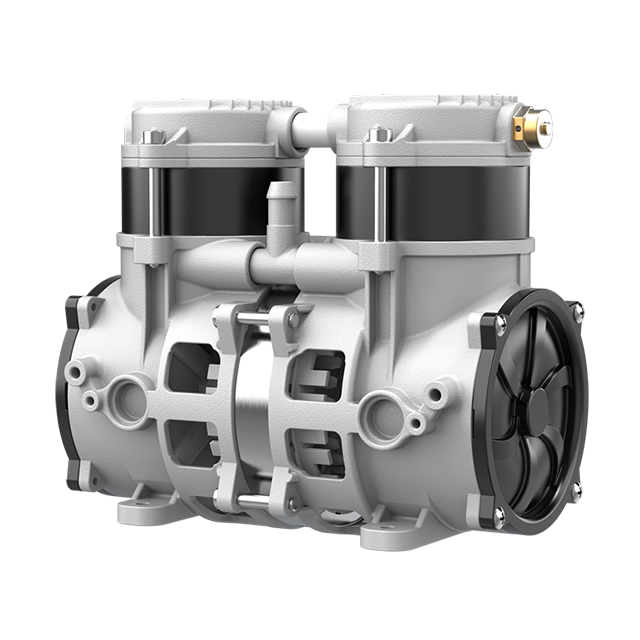
Every facility manager must evaluate the precise benefits and hidden risks of fluidless compression. You must weigh absolute air purity against strict mechanical limitations.
Pure air is absolutely essential for many critical industries. You must often meet strict ISO 8573-1 Class 0 or Class 1 air purity standards. Fluidless designs excel here. They inherently eliminate the risk of product spoilage. You completely avoid contaminated paint finishes. You also protect sensitive pneumatic controls from sticky residue. When absolute sterility matters, this architecture represents the only viable option.
Teflon and PTFE seals eventually degrade. This is an unavoidable mechanical reality. Every hour of operation wears down the microscopic coating. Once the coating wears thin, internal friction increases rapidly. Heat spikes exponentially inside the cylinder. This rapid heat buildup leads to complete pump failure. Unlike traditional units requiring simple fluid changes, a failed fluidless unit demands a complete rebuild. Often, you must replace the pump entirely. This reality heavily impacts your long-term equipment strategy.
Internal heat severely restricts operation times. Most consumer and light-commercial fluidless pumps carry a strict 50% duty cycle limit. You can only run them for half the time they remain powered on. If the pump runs for ten minutes, it must rest for ten minutes. Exceeding this limit guarantees overheating. A common mistake is buying a 50% duty cycle unit for a continuous task like sandblasting. The unit will overheat and fail within hours.
These units generate harsh, irritating noise. Users frequently complain in online forums about the high-decibel racket. High-RPM fluidless designs produce a distinct, piercing sound. The lack of dense internal fluid removes a natural sound dampener. The fast-moving internal parts vibrate aggressively against the housing. You might require a dedicated soundproof enclosure. Otherwise, operators will struggle to tolerate the noise indoors. OSHA regulations regarding noise exposure often become a significant concern.
Traditional lubricated systems offer incredible durability. However, they force operators to manage strict maintenance schedules and complex air treatment networks.
These machines are true industrial workhorses. Manufacturers build them specifically for 100% continuous duty cycles. They utilize heavy cast-iron cylinders. They incorporate advanced fluid cooling systems. These features allow them to run all day without thermal breakdown. They dominate manufacturing floors. They power bustling auto repair shops. If you need relentless, uninterrupted air power, this architecture delivers unmatched reliability.
Heavy cast iron naturally dampens sound. Furthermore, these machines utilize lower operating RPMs. Slower rotational speeds drastically reduce structural vibration. The presence of internal fluid also muffles mechanical clatter. This results in significantly quieter operation. It creates a smoother running experience compared to high-speed fluidless counterparts.
You cannot avoid trace vapor transmission. Microscopic droplets will inevitably bypass the piston rings. They enter the compressed air stream. This phenomenon is called carryover. It ruins sensitive applications if left unfiltered. It destroys automotive paint jobs. It damages delicate electronic components. It poses severe health risks in breathing applications.
You must perform rigorous routine maintenance. This is the ultimate trade-off for longevity. You will regularly check fluid sight glasses. You must perform scheduled fluid changes every 500 to 1,000 hours. You also need to replace air-fluid separators. Furthermore, you must manage condensate water. This water contains hazardous trace elements. You must legally dispose of oily condensate according to strict environmental regulations.
You need a structured approach to evaluate these competing technologies. Review these four core dimensions before finalizing any purchase order.
Evaluating long-term financial impact is crucial. You pay a much lower upfront cost for basic fluidless piston models. You enjoy zero ongoing fluid or separator expenses. However, you face a massive cost for eventual pump replacement. Conversely, lubricated systems cost more upfront. You incur ongoing consumable costs for filters and fluid. Yet, you gain a multi-decade lifespan if you maintain the unit properly. Over twenty years, a well-maintained lubricated machine often proves highly economical.
Calculate your daily usage patterns carefully. Intermittent use perfectly suits a 50% duty cycle machine. Think of a home garage or small DIY workshop. You fire a few nails, then the machine rests. Continuous use strictly requires a 100% duty cycle. Think of automated assembly lines. Think of HVAC control systems operating nonstop. Failing to match your duty cycle guarantees premature equipment failure.
You can force a lubricated compressor to produce pristine air. However, this requires complex downstream filtration. You must add multi-stage coalescing filters. You need massive desiccant dryers. You must install activated charcoal filters to remove vapor. These additions create hidden installation costs. They also introduce pressure drops. Sometimes, buying an inherently fluidless unit proves significantly cheaper. It eliminates the need for massive filtration networks entirely.
Industry regulations strongly dictate your available choices. The FDA sets extremely strict contamination limits for food packaging. The EPA strictly governs hazardous condensate disposal protocols. Violating these federal rules results in massive financial penalties. Fluidless systems completely bypass hazardous condensate regulations. This simplifies environmental compliance drastically.
| Evaluation Dimension | Fluidless Architecture | Lubricated Architecture |
|---|---|---|
| Duty Cycle Limit | Typically 50% (Piston models) | Up to 100% (Continuous duty) |
| Air Purity Standard | Achieves ISO 8573-1 Class 0/1 | Requires heavy filtration for purity |
| Operating Temperatures | Runs significantly hotter | Runs cooler due to fluid dissipation |
| Routine Upkeep | Air filters, moisture draining | Fluid changes, separators, sight glass |
| Acoustic Output | High-decibel, high-pitch noise | Muffled, lower-pitch operation |
Every industrial sector has specific pneumatics requirements. Use this application matrix to quickly identify the appropriate technology for your specific field.
Certain industries cannot tolerate even microscopic contamination. In these fields, you must prioritize absolute air purity above overall machine longevity.
Healthcare and Clinics: Medical facilities require completely sterile air. You must use an Oil-Free Compressor Pump to ensure patient safety and power ventilators without introducing dangerous aerosols.
Cosmetics and Dermatology: Beauty and aesthetic clinics rely on pristine air delivery. An Oil-Free Compressor Pump protects sensitive skin treatments and airbrush applications from aerosolized lubricants.
Oral Surgery and Orthodontics: Dental equipment operation demands precise, hygienic pneumatics. An Oil-Free Compressor Pump prevents oral tool contamination and protects patients during invasive procedures.
Food and Beverage Production: Packaging lines demand zero contamination to comply with FDA guidelines. Spoilage ruins entire production batches.
Surface Coating and Finishing: High-end spray painting and auto-body finishing cannot tolerate vapor. Even a few micro-droplets cause severe paint fisheyes.
Semiconductor Manufacturing: Cleanroom manufacturing for delicate electronics requires absolute purity. Trace vapors destroy microscopic circuitry instantly.
Many rugged environments prioritize raw power and endurance. In these settings, trace vapor is entirely irrelevant.
Automotive Service Centers: Mechanic shops and automotive repair bays prioritize durability. They need machines that run all day to support multiple mechanics simultaneously.
Heavy Fabrication: General manufacturing and metalworking plants need constant, high-volume airflow. They run large pneumatic presses and stamping machines.
Construction and Contracting: Heavy-duty pneumatic tool operation thrives on lubricated air. Tools like impact wrenches, orbital sanders, and framing nailers actually benefit from trace lubricants traveling through the air lines.
Woodworking Facilities: Large cabinet shops require massive CFM to run CNC routers and dust collection systems continuously.
A Best Practice Tip: Always size your tank appropriately. Even if you buy a lubricated machine capable of a 100% duty cycle, a larger receiver tank prevents the motor from short-cycling. This simple step extends the life of internal contactors and reduces overall energy consumption significantly.
Neither technology is objectively superior. Application parameters strictly dictate superiority. You must align the machine with your facility goals. Evaluate your end-product carefully. If stray vapor ruins your product, accept the shorter lifespan. You must buy a fluidless model. However, if your priority is running industrial tools all day without burning out the unit, buy a lubricated model.
Do not let the myth of a "maintenance-free" machine cloud your judgment. Every pneumatic system requires diligent upkeep. You will either change fluid regularly, or you will replace worn PTFE seals entirely. Acknowledge these realities before spending your capital budget.
Take actionable steps today. Consult an industrial air system specialist. Review specific product catalogs for exact specifications. Finally, use a professional sizing calculator. Determine your precise CFM and purity requirements before signing a purchase order. Making an evidence-based decision today prevents catastrophic production delays tomorrow.
A: Yes, but only with a rigorous downstream filtration system. You must install multi-stage coalescing filters and desiccant dryers to catch microscopic aerosols and moisture. This elaborate setup adds significant lifecycle costs. It also requires strict daily maintenance to prevent devastating paint fisheyes.
A: Realistic hour ratings vary widely. Standard consumer fluidless pumps typically last between 500 and 2,000 hours before internal seals fail. In contrast, commercial lubricated units easily exceed 15,000 hours. You must maintain the lubricated units properly to achieve this multi-decade longevity.
A: No. The "maintenance-free" label is highly misleading. While you skip messy fluid changes, you still face routine chores. You must replace intake filters regularly. You must drain the receiver tank manually to remove condensed moisture. Eventually, you will require a complete pump rebuild when internal coatings degrade.


