
Views: 0 Author: Site Editor Publish Time: 2026-08-04 Origin: Site


In medical and dental environments, compressed air quality is a matter of patient safety, equipment longevity, and strict regulatory compliance. Trace contaminants can trigger severe failures in critical care situations. Contamination from oil vapor can damage sensitive pneumatic components in ventilators, degrade precise dental handpieces, and compromise diagnostic lab results. Clinicians rely on absolute air purity to prevent bacterial growth and mechanical malfunctions during procedures.
This guide provides clinical engineers and procurement teams with an evidence-based framework. You will learn how to evaluate, size, and select the appropriate equipment for specific clinical applications. We detail the critical technical standards, operational metrics, and integration requirements necessary for success. By understanding these principles, you can ensure reliable performance and safeguard patient health across every pneumatic system.
Medical-grade compressed air requires strict adherence to ISO 8573-1 Class 0 standards; standard industrial pumps are insufficient.
Evaluating a pump requires balancing continuous duty cycle requirements against thermal management and noise (dB) limitations in clinical settings.
"Oil-less" and "oil-free" are not interchangeable terms; medical devices require true oil-free architecture to eliminate vapor migration risks.
Engineers often encounter confusing terminology when sourcing pneumatic components. Manufacturers frequently market products using ambiguous labels. "Oil-less" typically means the actual compression chamber lacks oil. However, the crankcase or lower mechanical sections may still contain liquid lubricants. True "oil-free" means no liquid lubricants exist anywhere inside the pump system. Medical applications demand a strictly oil-free architecture to guarantee patient safety.
Standard industrial "oil-less" systems often fail rigorous medical standards. Liquid oil in the crankcase heats up during operation. This heat creates microscopic oil vapors. These vapors can easily migrate past mechanical seals and enter the air stream. Once airborne, oil vapor coats internal ventilator pathways and ruins sensitive laboratory instruments. You must eliminate this risk completely. Selecting dedicated Oil-Free Compressor Pumps For Medical Devices ensures zero oil exists to vaporize in the first place.
Regulatory bodies classify compressed air purity using the ISO 8573-1 standard. For clinical environments, Class 0 is the non-negotiable baseline. Class 0 certification requires strict independent testing. It guarantees the air contains absolutely no added oil vapors or aerosols. Do not accept standard industrial pumps for clinical applications. Always demand documented Class 0 certification before specifying a pump for a patient-facing system.
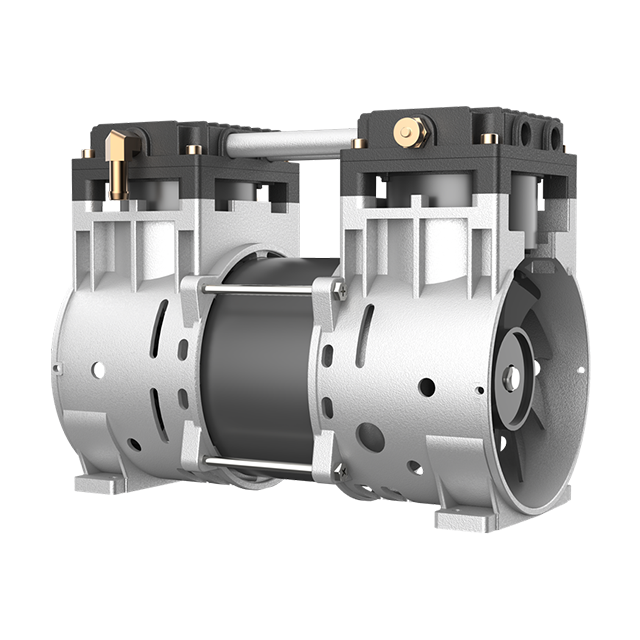
Selecting the optimal pump requires careful analysis across four primary engineering dimensions. You must balance these metrics to achieve reliable operation.
You must match pump output directly to the specific consumption rates of your clinical equipment. Evaluate both cubic feet per minute (CFM) and the required operational pressure. Oversizing a pump causes frequent short-cycling. Short-cycling prevents the motor from reaching optimal operating temperatures. Undersizing a pump forces the unit to run constantly. This continuous strain causes rapid overheating and catastrophic mechanical failure. Map the actual peak demand of your device before finalizing any flow rate specifications.
Understanding duty cycle ratings prevents premature equipment death. Duty cycle defines how long a pump can run continuously before needing a rest period. A 100% duty cycle rating means the pump can run continuously without stopping. Many standard pumps only offer intermittent duty cycles. Applying an intermittent pump to a high-demand device like a medical ventilator invites disaster. Always verify the clinical application matches the engineered duty cycle of your chosen Oil-Free Compressor Pump.
Clinical environments demand exceptionally low decibel (dB) ratings. Excessive noise causes patient distress and disrupts medical staff communication. True oil-free designs generate more mechanical friction. This friction naturally increases operational noise. You must evaluate mitigation strategies. Bare pump noise output rarely meets hospital ward standards. Consider adding vibration isolation mounts. Custom acoustic enclosures also dramatically reduce perceived noise. Compare scroll-type compressors against reciprocating models, as scroll designs often produce smoother, quieter air delivery.
Oil-free pumps run inherently hotter than lubricated models. The absence of cooling oil means the system relies entirely on air cooling. Assess the manufacturer's heat dissipation designs carefully. Look for oversized cooling fans and heavily finned cylinder heads. Ambient temperature limitations also play a critical role. A pump placed inside a poorly ventilated medical cart will overheat rapidly. Always design your system layout to promote unrestricted airflow around the pump chassis.
Medical gas systems operate under strict legal and safety frameworks. In the United States, the FDA regulates medical air as a pharmaceutical drug. Facilities must also comply with NFPA 99 standards for healthcare facilities. European and international hospitals often follow HTM 02-01 guidelines. These frameworks dictate how compressed air must be generated, stored, and distributed. Familiarize your engineering team with the specific local codes governing your target market.
An oil-free pump alone never guarantees medical-grade air. The pump pulls in ambient atmospheric air. This ambient air contains dust, pollen, and microorganisms. You must integrate secondary air treatment components. Implementing comprehensive filtration is mandatory.
Common mistakes in air treatment include:
Assuming a Class 0 pump removes ambient dust particles.
Failing to monitor pressure drops across aging filter elements.
Ignoring ambient humidity levels in the operating environment.
You need inline HEPA filtration to capture microscopic particulates and bacteria. Additionally, you must control moisture. Compressing atmospheric air concentrates its natural water vapor. Use desiccant dryers or advanced membrane dryers to lower the pressure dew point. Dry air prevents bacterial breeding grounds inside pneumatic tubing.
Internal pump materials matter immensely. Traditional iron cylinders can rust if exposed to moisture. Rust generates abrasive particulates. These particulates will destroy downstream valves. Evaluate pumps featuring biocompatible or corrosion-resistant internal materials. Specify stainless steel valve plates. Look for specially coated or anodized aluminum cylinders. Superior material selection prevents contamination at the source.
Sales brochures often promote oil-free systems as completely "maintenance-free." This is an engineering myth. Because these pumps lack liquid oil, they rely on self-lubricating solid materials. Manufacturers typically use PTFE (Teflon) piston rings or specialized cup seals. These composite materials inevitably wear down through normal mechanical friction. Acknowledge this wear and plan your service schedules accordingly.
Operating hours dictate maintenance schedules. You must track total run time accurately. Different pump designs offer varying lifespans for their internal wear parts. Standard lightweight models might require a top-end rebuild after 4,000 hours. Heavy-duty clinical models can often run 10,000 hours before seal replacement becomes necessary.
| Pump Design Category | Typical Wear Part Lifespan | Ideal Clinical Application |
|---|---|---|
| Lightweight Reciprocating | 3,000 - 5,000 hours | Intermittent dental carts, mobile aspirators |
| Heavy-Duty Reciprocating | 8,000 - 10,000 hours | Continuous respiratory support, central lab air |
| Medical Scroll Compressors | 10,000+ hours (Tip seals) | Central hospital air systems, sensitive diagnostics |
Consider the practical mechanics of routine maintenance. How easy is it for an in-house clinical engineering team to rebuild the pump? Look for designs featuring accessible cylinder heads. Assess the availability of official OEM rebuild kits. Pumps requiring specialized factory tools for simple seal replacements will frustrate maintenance staff. Choose designs offering straightforward top-end access.
Reliability directly impacts patient care. Equipment failure during a clinical procedure creates severe safety risks. Investing in a heavier-duty pump inherently reduces the frequency of unexpected failures. Analyze the impact of clinical downtime. Frequent maintenance interruptions disrupt hospital workflows. A robust pump extends the time between necessary service events. This increased reliability safeguards critical patient care schedules.
Your integration approach depends entirely on the end product. Miniature pumps embedded inside portable chassis face unique challenges. Mobile oxygen concentrators require ultra-compact, lightweight units. These embedded pumps must reject heat in confined spaces. Conversely, central dental mechanical rooms utilize large, standalone systems. Standalone units prioritize maximum flow capacity over size constraints. Identify your deployment strategy early in the design phase.
Medical environments enforce strict electrical safety standards. You must specify motors meeting medical-grade isolation requirements. Consider electromagnetic interference (EMI). A poorly shielded motor can disrupt nearby sensitive monitoring equipment. Ensure your pump components feature low EMI profiles. If you plan to export the medical device, verify global voltage compatibilities. Specify multi-voltage motors or universal power supplies to support international deployments.
Space is always limited in modern clinical settings. Medical carts and portable ventilators require extremely tight component packaging. Address footprint constraints by analyzing vertical versus horizontal pump profiles. Mounting orientation also impacts vibration control. Some pumps must sit perfectly level to maintain balanced mechanical operation. Verify the manufacturer's approved mounting angles before finalizing your internal chassis layout.
Selecting the proper pneumatic heart for clinical equipment is a rigorous engineering exercise. Start by verifying true oil-free architecture and demanding ISO Class 0 certification. Next, match your CFM and duty cycle requirements precisely to avoid short-cycling or overheating. Evaluate the acoustic profile to ensure the equipment operates quietly within sensitive hospital wards. Finally, account for long-term maintenance realities by reviewing realistic PTFE seal lifespans and serviceability constraints.
Do not rely solely on generalized marketing spec sheets. Request real-world flow curves, thermal testing data, and acoustic charts directly from manufacturers. These detailed metrics reveal how a pump behaves under actual clinical loads. Always consult specialized pneumatic engineers during your initial design phase. They can perform a custom sizing evaluation for your specific project. By taking a data-driven approach, you secure reliable, safe, and compliant air delivery for any medical application.
A: No. Standard industrial compressors lack ISO 8573-1 Class 0 certification. They often use internal materials susceptible to rust, creating hazardous particulate contamination. Furthermore, industrial units typically lack the integrated moisture and bacterial HEPA filtration required by stringent medical gas standards like NFPA 99. Patient safety demands dedicated medical-grade equipment.
A: You must differentiate between the wear parts and the core motor. The internal PTFE wear parts—such as piston rings and cup seals—typically last between 4,000 and 10,000 hours depending on the duty cycle. The core motor and primary bearings can easily last over 20,000 hours if the pump receives timely top-end rebuilds and proper thermal management.
A: Oil-free designs lack liquid lubrication, resulting in higher mechanical friction and louder operation. You can mitigate this noise by mounting the pump on soft vibration isolation pads. Enclosing the unit inside a specially designed acoustic cabinet also absorbs significant sound. Alternatively, specifying a continuous scroll-type pump rather than a reciprocating piston model dramatically reduces decibel output.
A: Yes. An oil-free pump still compresses raw atmospheric air. This compression process naturally concentrates ambient humidity into liquid water. You must remove this moisture using integrated desiccant or advanced membrane dryers. Controlling the dew point is essential to prevent internal corrosion and stop dangerous bacterial growth inside downstream clinical tubing.


