
Views: 0 Author: Site Editor Publish Time: 2026-09-05 Origin: Site


Home oxygen therapy has become an important option for patients who require supplemental oxygen outside hospitals and clinical facilities. An oxygen concentrator provides a practical way to generate oxygen from ambient air without relying on conventional high-pressure oxygen cylinders. At the center of this system is the compressor, which supplies the pressurized air required by the pressure swing adsorption (PSA) process. This article introduces the basic working principle of oxygen concentrators used for household oxygen therapy, examines the importance of compressor performance, and discusses key considerations for manufacturers developing reliable and quiet home-use oxygen equipment.
Oxygen is essential for human life, but some patients may require additional oxygen when their lungs cannot supply sufficient oxygen to the body.
In a hospital, supplemental oxygen can be supplied through centralized medical gas systems or oxygen cylinders. At home, however, these solutions can be less convenient. Cylinders require regular transportation and replacement, while centralized systems are generally unavailable outside clinical environments.
An oxygen concentrator offers another approach.
Instead of storing oxygen, the device continuously separates oxygen from the surrounding air and delivers the concentrated oxygen to the user.
This technology has helped make long-term oxygen therapy more practical in residential environments.
For equipment manufacturers, however, producing a reliable home oxygen concentrator requires more than simply adding a molecular sieve and a compressor. The complete system must maintain stable pressure and airflow while controlling noise, heat, power consumption, and vibration.
Household oxygen therapy refers to the use of supplemental oxygen in a residential setting according to an individual’s medical requirements.
It may be prescribed for people with certain chronic respiratory or cardiopulmonary conditions when their healthcare provider determines that additional oxygen is necessary.
The purpose is not to increase oxygen concentration for everyone, but to provide supplemental oxygen when clinically indicated.
Because home therapy can involve extended periods of equipment operation, the reliability and usability of the oxygen delivery system are particularly important.
A home oxygen concentrator therefore needs to operate consistently while remaining reasonably compact and quiet.
Most modern oxygen concentrators use a process known as Pressure Swing Adsorption (PSA).
The basic process can be simplified into several stages.
Stage 1: Ambient Air Intake
The concentrator draws room air into the machine.
Atmospheric air contains approximately 21% oxygen, while nitrogen represents the largest portion of the remaining gas mixture.
Stage 2: Air Compression
The compressor increases the pressure of the incoming air.
This is a critical stage because the PSA process requires compressed air to pass through molecular sieve material.
Stage 3: Nitrogen Adsorption
The pressurized air enters molecular sieve beds, commonly containing zeolite.
The molecular sieve preferentially adsorbs nitrogen while allowing oxygen-rich gas to pass through.
Stage 4: Oxygen Delivery
The oxygen-enriched gas is collected and delivered through the oxygen outlet to the user.
Stage 5: Sieve Regeneration
After a period of adsorption, the molecular sieve bed is depressurized so that the adsorbed nitrogen can be released.
The system then switches between sieve beds to maintain a continuous oxygen supply.
This cycle is repeated automatically during operation.
The compressor is one of the most important mechanical components inside an oxygen concentrator.
It supplies the compressed air required by the PSA system. If airflow or pressure becomes unstable, the performance of the molecular sieve process can also be affected.
Several compressor parameters are therefore important.
The compressor must provide sufficient airflow for the intended oxygen production capacity.
Insufficient airflow may limit system output, while excessive airflow can increase power consumption and thermal load.
The PSA system requires an appropriate pressure range to operate effectively.
Stable compressor output helps maintain consistent adsorption and regeneration cycles.
Home oxygen concentrators may operate for extended periods. Compressor components therefore need to withstand repeated compression cycles without excessive wear.
The compressor generates heat during operation.
If heat is not effectively managed, the temperature inside the oxygen concentrator can increase and influence the performance and reliability of surrounding components.
Because home oxygen concentrators may operate close to the user, compressor noise and vibration can become major design considerations.
Oil-free compression is particularly suitable for applications where clean compressed air is required.
In an oil-lubricated compressor, lubricating oil is used to reduce friction and improve sealing between moving components. Although downstream filtration can remove contaminants, the system becomes more dependent on air treatment and maintenance.
An oil-free compressor avoids lubricating oil in the compression chamber.
For oxygen concentrator manufacturers, this can simplify the air supply architecture and reduce concerns associated with oil contamination.
However, oil-free does not mean maintenance-free.
The compressor still requires appropriate control of temperature, valve wear, sealing performance, vibration, and other operating conditions.
The quality of the compressor design remains critical.
Noise becomes especially important when medical equipment moves from hospitals into homes.
A hospital environment already contains many sources of background noise. A home environment is generally much quieter.
A compressor that seems acceptable in a factory or workshop may therefore be perceived as loud when operating next to a patient’s bed.
Compressor noise can originate from:
* Motor vibration
* Piston movement
* Valve impact
* Air pulsation
* Bearing operation
* Structural resonance
* Intake and exhaust airflow
Reducing noise requires more than adding external insulation.
The pump itself needs to be optimized.
Balanced moving components, appropriate valve design, vibration reduction, optimized airflow passages, and effective muffler structures can all contribute to better acoustic performance.
For home oxygen concentrators, low noise is therefore not merely an engineering preference. It can directly influence the user’s experience with the equipment.
Home oxygen concentrators are generally designed around limited installation space.
Users may need to place the equipment beside a bed, in a living room, or in another residential area.
This creates a difficult engineering balance.
The compressor must be:
Small enough to fit inside the equipment, but powerful enough to provide the required airflow and pressure.
At the same time, reducing the physical size of the compressor can make heat management more challenging.
The compressor, motor, valves, and surrounding electronic components all generate or absorb heat during operation.
Consequently, pump head design, airflow management, ventilation, and thermal dissipation should be considered together during equipment development.

nlike many portable household appliances, an oxygen concentrator may be required to operate for long periods.
This places continuous demands on the compressor pump.
Important reliability factors include:
* Valve durability
* Piston and cylinder wear
* Bearing quality
* Sealing performance
* Motor stability
* Temperature control
* Vibration control
A small mechanical problem can gradually affect compressor efficiency.
For example, deteriorating valve sealing may reduce effective airflow. Increased friction may raise operating temperature. Excessive vibration can place additional stress on surrounding components.
For this reason, compressor reliability should be evaluated as part of the complete oxygen concentrator system rather than as an isolated component.
For oxygen concentrator manufacturers, the pump head deserves particular attention.
The pump head directly influences several operating parameters of the final product.
Pump Head Factor Possible Effect on Oxygen Concentrator
Airflow Influences available PSA air supply
Pressure Supports adsorption cycle
Valve sealing Influences compression efficiency
Noise Affects home-use comfort
Vibration Influences equipment stability
Temperature rise Affects component reliability
Power consumption Influences overall energy use
Dimensions Affects equipment layout
Durability Influences service life
This is why compressor selection should take place early in the oxygen concentrator development process.
Changing the compressor late in product development can affect the electrical system, cooling structure, enclosure design, acoustic treatment, and PSA operating parameters.
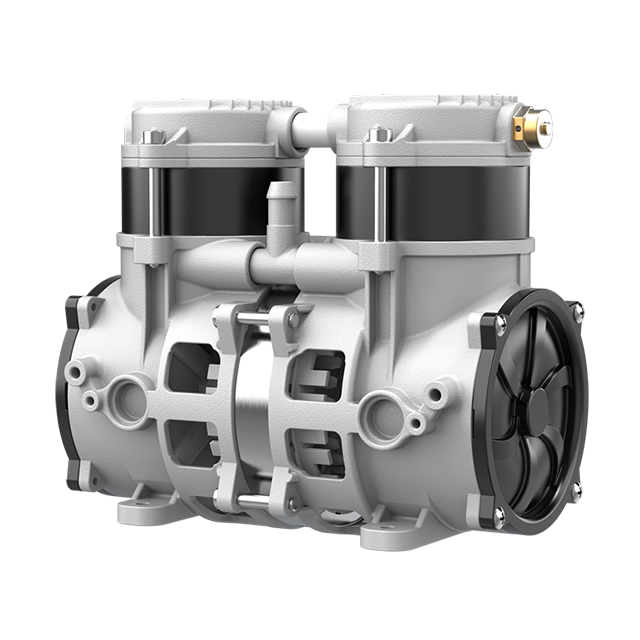
At OUHANG, we specialize in oil-free reciprocating compressor pump heads designed for oxygen concentrators and other applications requiring clean and stable compressed air.
Our engineering process considers the relationship between the pump head and the final equipment.
Key development areas include:
* Airflow and pressure matching
* Oil-free compression
* Valve system optimization
* Low-noise operation
* Vibration reduction
* Thermal management
* Precision machining
* Long-term operating reliability
Different oxygen concentrators may have different airflow, pressure, power, and installation requirements.
For this reason, we provide compressor pump head solutions for different equipment configurations rather than treating every oxygen concentrator as the same application.
For OEM customers, pump performance can also be evaluated according to the requirements of the final machine, helping manufacturers achieve a better balance between airflow, noise, energy consumption, size, and reliability.

The development of home oxygen therapy equipment is closely connected with broader trends in medical device engineering.
Future oxygen concentrators are likely to place greater emphasis on:
Smaller Size
Compact components can help manufacturers develop more portable and space-efficient oxygen concentrators.
Lower Noise
Acoustic performance will remain important as oxygen therapy becomes increasingly integrated into everyday home environments.
Lower Energy Consumption
Improved compressor efficiency and system optimization can reduce the energy required for long-term operation.
Greater Reliability
Longer component life can reduce service requirements and improve the overall user experience.
Intelligent Monitoring
Sensors and electronic control systems can provide information about pressure, temperature, operating time, and other equipment parameters, supporting better system management.
These developments will require closer cooperation between compressor manufacturers and oxygen concentrator OEMs.
Oxygen concentrators have changed the way supplemental oxygen can be delivered in residential environments.
By using PSA technology, an oxygen concentrator can continuously produce oxygen-enriched gas from ambient air without depending entirely on stored oxygen cylinders.
Behind this process is a relatively simple but highly important mechanical component—the compressor.
The compressor must provide suitable airflow and pressure while operating within the constraints of noise, vibration, temperature, energy consumption, and available installation space.
For home oxygen therapy equipment, the compressor pump head is therefore more than a source of compressed air. It is one of the components that can influence the performance, reliability, and usability of the complete oxygen concentrator.
As the market continues to move toward quieter, smaller, more efficient, and more reliable medical equipment, application-specific oil-free compressor pump heads will continue to play an important role in oxygen concentrator development.
Q1: How does an oxygen concentrator produce oxygen?
An oxygen concentrator typically uses Pressure Swing Adsorption (PSA). The compressor pressurizes ambient air, and molecular sieve material preferentially adsorbs nitrogen, allowing an oxygen-enriched gas stream to be produced.
Q2: Why is an oil-free compressor used in an oxygen concentrator?
Oil-free compression eliminates lubricating oil from the compression chamber, reducing the risk of oil contamination and making the compressor suitable for applications requiring clean compressed air.
Q3: Does the compressor affect oxygen concentrator performance?
Yes. Compressor airflow, pressure stability, temperature, power consumption, and reliability can all influence the operating conditions of the PSA system and therefore the performance of the complete oxygen concentrator.
Q4: Why should an oxygen concentrator compressor be quiet?
Home oxygen concentrators may operate for extended periods in close proximity to users. Lower compressor noise can improve comfort and make the equipment more suitable for residential environments.
Q5: What should OEM manufacturers consider when selecting an oxygen concentrator compressor?
Important parameters include required airflow, pressure, power consumption, noise, vibration, temperature rise, dimensions, valve durability, sealing performance, and expected operating conditions.
Q6: Is a smaller compressor always better for a portable oxygen concentrator?
Not necessarily. Reducing compressor size may affect airflow, cooling capacity, noise, and durability. The compressor should be selected according to the complete system requirements rather than size alone.


